Vancouver Spring 2026 Market Update: The 3 Signals Every Buyer Should Be Watching Right Now
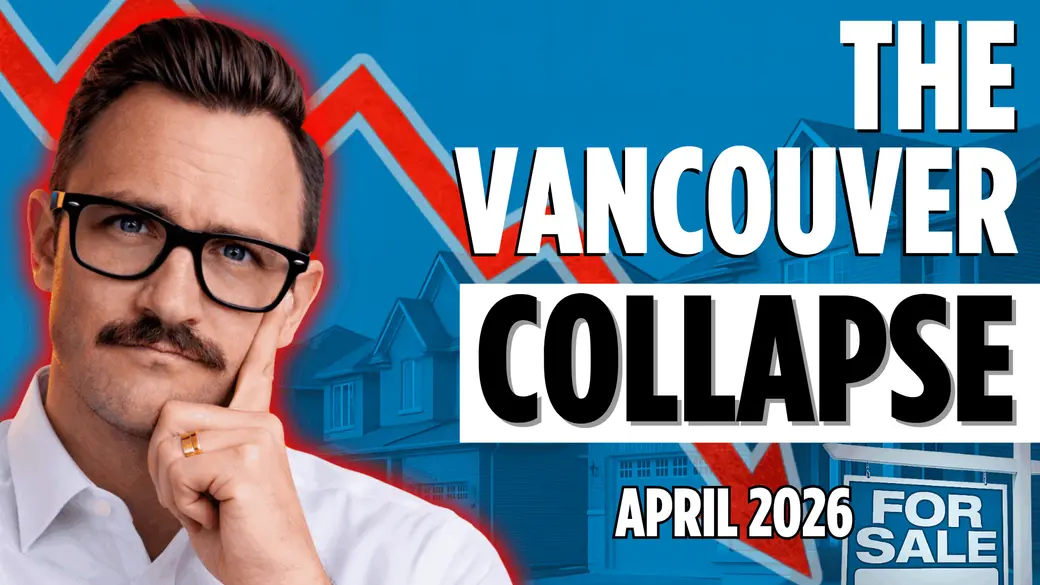
Vancouver Spring 2026 Market Update: The 3 Signals Every Buyer Should Be Watching Right Now
Prefer video? Subscribe on YouTube — 2 new Vancouver market videos every week.
The quick take
Vancouver's spring 2026 market is tilting toward buyers for the first time in years. Inventory is climbing, the Bank of Canada is cutting, and a two-speed market is separating the stressed newer owners from the mortgage-free long-term holders. Here are the three signals I'm telling my buyer clients to track — and exactly how to act on each.
For the first time in almost a decade, the leverage in Vancouver real estate is genuinely moving toward buyers — but the shift is subtle, uneven, and easy to misread if you're only watching the headlines. The media wants a crash narrative. The bulls want a V-shaped recovery. The reality is neither. What's actually happening in April 2026 is a coordinated shift across three variables that, when you line them up together, tell a clearer story about where to act — and where to wait.
The 3 Signals at a Glance
Signal #1: Inventory Is Climbing — and Days on Market Are Telling the Story
The cleanest signal in any real estate market is how long listings are sitting before they move. In the Greater Vancouver market over the first quarter of 2026, the average days-on-market number has climbed meaningfully versus the same period in 2024 and early 2025. Condos sitting for 30 to 60 days used to be a yellow flag. In April 2026, it's average. Detached listings that would have moved in a weekend at their 2022 peak are now cycling through two or three price drops before finding a buyer.
That's not a crash. It's a recalibration. The 2022-2023 cohort of multiple-offer weekends was an outlier, not a baseline. What's emerging now is closer to a functional market — where buyers have time to do due diligence, negotiate, and walk away without losing the only opportunity they'll ever get.
"Properties that would have sold in a weekend 18 months ago are now sitting for weeks, sometimes months. That means you have time — time to do your due diligence, time to negotiate, and time to walk away."
— On the shift in buyer leverage
How to act on Signal #1: If you've been sitting on the sidelines because of multiple-offer fatigue, that excuse is no longer valid for most of the market. Get your pre-approval current (under 90 days), build a comp list for your target neighbourhood, and start viewing. The right offer in April 2026 is not a 2022-style blind rush — it's a considered, conditional, data-backed proposal with room to negotiate.
Signal #2: The Bank of Canada Is Likely to Keep Cutting
The February 2026 Labour Force Survey — the one where Canada shed 84,000 jobs in a single month, with BC absorbing over 20,000 of them — gave the Bank of Canada exactly the kind of cover it needed to continue cutting. Macklem doesn't need a recession to justify further easing; he needs a weakening labour market and decelerating inflation, and he has both.
For buyers, this matters in three specific ways. Lower rates mean lower monthly carrying costs on a mortgage of the same principal. Lower rates mean better stress-test qualifying ratios, so the purchase price you qualify for climbs. Lower rates mean more competition re-entering the market in 6-12 months — so buyers who move early capture the inventory advantage before the rate-drop effect pulls other buyers off the sidelines.
The rate math that matters: A 50-basis-point cut on a $1M mortgage at 25-year amortization is roughly $285/month in reduced payments. That's real budget. But it also means every buyer who was priced out at 5.5% will re-qualify at 5.0% — and they'll come looking in the same inventory you're looking at now. The inventory advantage expires when the rate signal lands.
How to act on Signal #2: Lock a rate hold before you shop. Most lenders offer 90-120 day rate holds — meaning if rates drop during that period, you get the lower rate; if they rise, you keep the locked rate. It's a free option. Exercise it.
Signal #3: The Two-Speed Market Is Getting More Extreme
Here's the signal most analysts miss because it requires two numbers to understand. Approximately 50% of Vancouver homeowners carry no mortgage at all (2021 Census data — the true number is likely higher by 2026 as that cohort ages). Those owners are financially insulated from rate movements, employment shocks, and market softness. They're not selling, because they don't need to.
The other 50% — particularly the 2019-2022 buyer cohort who purchased at sub-3% rates and are now renewing — are under genuine pressure. Renewal rates are meaningfully higher. Household budgets built around continued employment stability are being stress-tested by the labour market shift. This is the cohort that creates most of the motivated selling you'll see over the next 12-18 months. Not a flood. A trickle. But the trickle is concentrated in specific submarkets — newer high-rise condo towers in Yaletown, Brentwood, and Metrotown where carrying costs are highest relative to equity.
Risk Flag
The two-speed market means Vancouver statistics can look misleading in either direction. The "market is stable" narrative holds for detached homes in established neighbourhoods with mortgage-free owners — but absolutely does not hold for newer condos with stressed renewal cohorts. If you're buying or selling, get neighbourhood-specific data. City-wide averages are lying to both sides right now.
How to act on Signal #3: If you're a buyer, look where motivated sellers concentrate — newer high-rise condos with 2019-2022 buyer cohorts renewing. If you're a seller, understand which side of the speed divide your property sits on. Well-maintained detached homes in established neighbourhoods are still commanding strong pricing. Newer condos with high strata fees and thin equity stories need sharper marketing and more negotiable pricing to compete.
The Spring 2026 Buyer Playbook (5 Steps)
1. Lock your rate hold now. 90-120 days. Most brokers will do this without a property address. Protects you on the way down, insulates you on the way up.
2. Build a neighbourhood-specific comp list. City-wide averages lie in 2026. You need to know days-on-market, list-to-sale ratio, and price trajectory for your exact target area — not Vancouver as a whole.
3. Shop both speed lanes. Compare a motivated-seller newer condo against an established-neighbourhood detached option at similar carrying cost. The value gap surprises most buyers.
4. Stress-test your employment. Lending scrutiny has tightened. If your industry is showing signs of softness (BC construction, finance-insurance-RE, healthcare — the three sectors hit hardest in February 2026), get ahead of renewal conversations with your broker.
5. Move before the crowd does. Rate-cut signals pull competing buyers off the sidelines. The 90-day window between "cut announced" and "buyers re-engaged" is your best opportunity window.
What I'm Telling My Clients Right Now
For strategic buyers with stable income and access to capital — whether that's savings, family support, or a combination — spring 2026 is the best window I've seen in years. Not because prices are crashing. They're not. Because the combination of rising inventory, softening rates, reduced competition, and negotiable sellers is a rare alignment of four variables that independently favor buyers and rarely show up together.
For sellers, the game has shifted but not collapsed. Well-priced, well-presented properties in established neighbourhoods are still transacting. The properties that are sitting are the ones that priced for the 2022 market and never adjusted. If you respect the data, price with precision, and invest in the marketing package, you can sell effectively in April 2026.
For current homeowners watching renewal anxiety from the news — talk to your broker now, not on renewal day. There are product options, amortization extensions, and blended rate strategies that exist but only if you engage early. Waiting makes fewer of them available.
The broader picture: Vancouver real estate is neither crashing nor booming. It's functioning. For the first time in a long time, normal buyer/seller dynamics are back. That's the real story of spring 2026 — and the buyers who understand it are already acting.
Ready to make your move in Vancouver's market?
Whether you're buying, selling, or just want to understand what's happening — I'm here to help.
📞 Book a 30-Minute Strategy Call
🏠 Search Properties 🎥 Subscribe on YouTube
Kyle Mark, REALTOR® | eXp Realty | Vancouver Real Estate Expert
FAQ: Vancouver Spring 2026 Market
Is now a good time to buy a home in Vancouver in spring 2026?
For buyers with stable employment and access to capital, spring 2026 is the most favourable window in years. Inventory is climbing, the Bank of Canada is cutting rates, sellers are negotiable, and the competition has thinned versus the 2022 peak. That said, buyer quality of situation matters more than ever — lending scrutiny has tightened, so stable income and current pre-approval are essential.
Are Vancouver home prices falling in 2026?
Prices are softening in specific segments — newer high-rise condos in neighbourhoods like Yaletown, Brentwood, and Metrotown where 2019-2022 buyer cohorts face renewal stress. Detached homes in established neighbourhoods are holding value well. City-wide averages obscure this two-speed dynamic; neighbourhood-specific data tells a truer story.
Will the Bank of Canada cut rates again in 2026?
Most market analysts expect continued easing through 2026 based on the weakening Canadian labour market (84,000 jobs lost nationally in February 2026, 20,000+ in BC), decelerating inflation, and US tariff pressure on trade-dependent sectors. Exact timing is not guaranteed — discuss rate-hold strategies with your mortgage broker.
Should I wait to buy in Vancouver until rates drop further?
Waiting has a cost. Every rate cut pulls previously priced-out buyers back into the market, increasing competition and reducing inventory leverage. The 90-day window after a cut announcement is typically the best buyer window before competition returns. A rate hold (90-120 days) lets you capture the downside of rate cuts without sacrificing the upside of acting during a low-competition period.
What is the two-speed market in Vancouver?
The two-speed market refers to the growing divide between mortgage-free long-term homeowners (roughly 50% of Vancouver owners per 2021 Census) and the stressed 2019-2022 buyer cohort facing renewal at meaningfully higher rates. The first group is financially insulated and not selling; the second group creates most of the motivated selling you'll see over the next 12-18 months. The dynamic means city-wide statistics can mislead buyers and sellers in opposite directions.
Which Vancouver neighbourhoods have the most motivated sellers in 2026?
Newer high-rise condo towers in Yaletown, Brentwood, Metrotown, and parts of downtown have the highest concentration of 2019-2022 buyers facing renewal stress. These are the neighbourhoods where motivated-seller inventory is concentrating. Established detached neighbourhoods (Point Grey, Kerrisdale, North Van, parts of Burnaby) have fewer forced sellers and are holding pricing better.
How can I get a Vancouver-specific market update for my situation?
Book a 30-minute strategy call at bit.ly/Book_Your_Discovery_Call_ and I'll walk you through your neighbourhood-specific data, your personal rate environment, and what a move looks like for your specific circumstances. No pressure, no sales pitch — just data and strategy.
Categories
Recent Posts










GET MORE INFORMATION